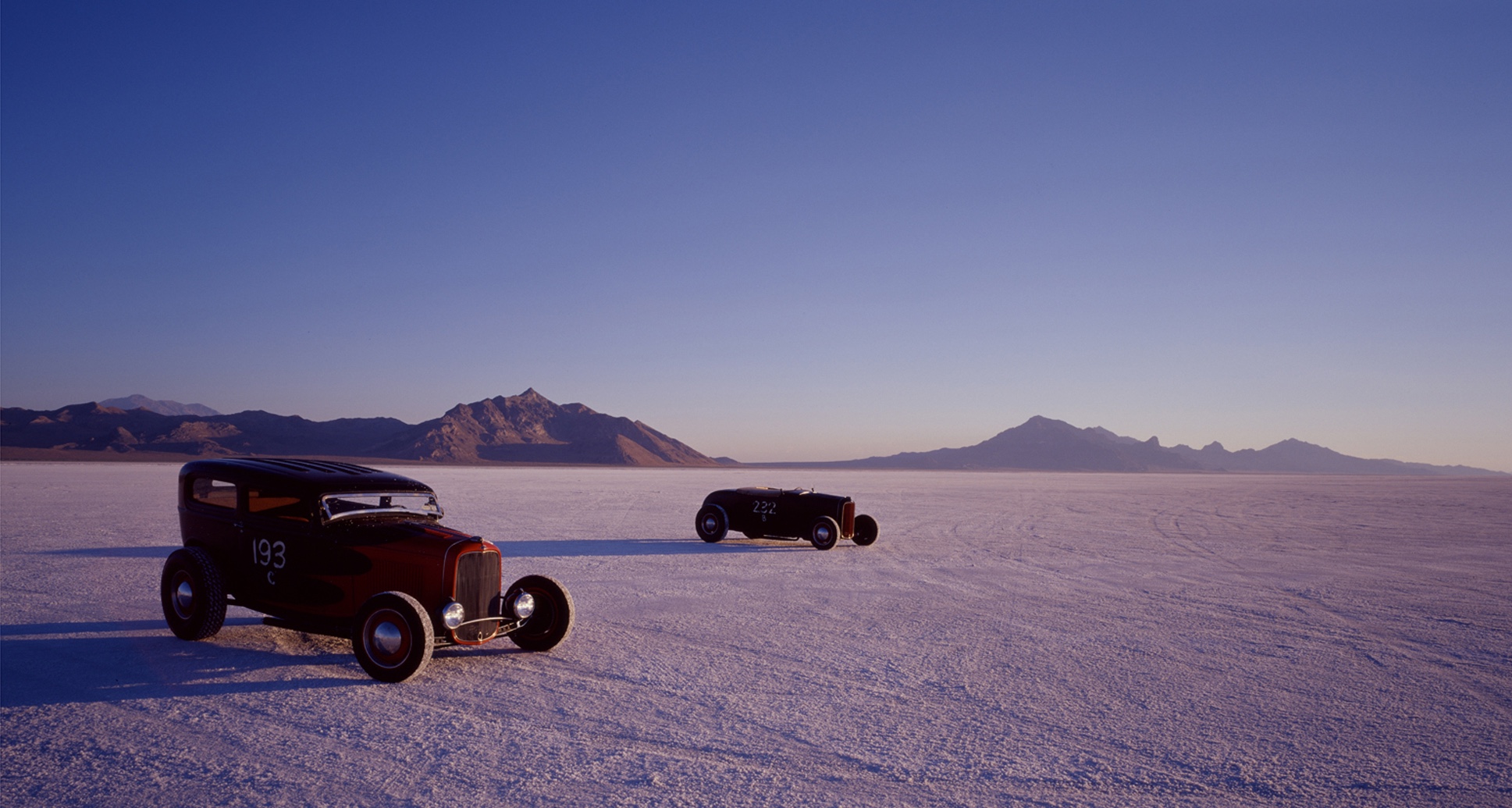
There’s a strip of land in Utah, a strip so unique and perfect it’s become the place where legendary speed records have been set. A place many consider the temple of speed. Iconic speed legends have graced the salty land to make us all wonder just what does it feel like going 200+ MPH on a motorcycle? It’s a spot where racers become adults…and not kids in a garage dreaming of speed. The Bonneville Salt Flats and the famous Bonneville Speedway.
Today, in 2021, these flats are in trouble of surviving. The 14 miles of perfectly flat ash-white earth salts that bubbles and hardens creating a perfect flat, smooth surface for speed. When the flats became “God’s Own Runway” in the 1940s the surface was 3 feet thick. 3 feet to protect tires of motorized genius from touching anything but perfectly laid salt. Today, some spots are 2 inches thick. That’s an average golf tee.
The history of Bonneville Speedway is great. It’s a long history. From the Knight Rider intro to Mickey Thompson breaking 400 mph (406.6 exactly) being the first human to crack that speed. We’ve seen many land speed records happen here and nothing rivals the excitement of seeing if a driver or rider can go .10 faster than their previous run.
It all started in 1912 when the speedway was first used for motor sports. The first land speed record was set here in 1914 by Teddy Tetzlaff most notably known for Indy 500 fame. The 1930s was when the flats became THE spot for pushing the limits when Ab Jenkins and Sir Malcolm Campbell competed to set land speed records. Sir Malcolm won, hitting 301.129 mph in a Blue Bird. As popularity grew, the Utah Department of Transportation would mark off two tracks for use typically set between 10-12 miles. Soon came motorcycles, rocket cars and even bicycles (top speed clocked at 183.9 mph in 2018 by Denise Mueller-Korenek.) I posted the video below because it’s awesome.
But the natural speedway is in serious trouble. Salt mining and natural erosion have caused the speedway to become almost unpredictable. Not something you want when you’re passing the century mark in a car or on a motorcycle. Catastrophic damage to engines, to the vehicles and motorcycles and not to mention, a higher probability of death. Engines can be rebuilt, people can not.
Federally leased salt brine mining and wet weather are destroying the surface. 70 years of potash mining have taken their toll. Deterioration of surrounding area have washed away layers and layers of salt. Every winter a private plant near the speedway siphons off more than a million gallons of brine from the flats, it’s placed in ponds to harvest potash…which is used for fertilizer. The first time deterioration occurred was in the 1960s, but it took 30+ years for a replenishment plan. But how do you replace 50-70 million tons of salt? 17,000 years ago the salts were created, and their time is almost up.
So what can the racing world do? It doesn’t seem like much and the legacy of Bonneville Speedway may be over. There are other salt flats in the USA. Death Valley has Badwater Basin salt flats but being a National Park they are protected. Argentina and Tunisia have amazing salt flats so there’s potential there. But I recommend this, visit the salt flats in Utah and walk where history has been made. Visit them before they are gone. Be in awe of the beauty and the history of those flats and pass on its legacy to future generations.
 Time Out With Jenn & Lisa